





Mirror shaft
[edit] Mirror shaft
A mirror shaft is an architectural daylight-guidance system that redirects natural daylight into deep interior or below-grade spaces by using highly reflective (mirror-like) surfaces within a vertical or inclined shaft. The system is typically integrated into a lightwell or similar opening and is intended to increase the useful daylight reaching interior areas where conventional façade windows provide limited daylight access.
Definition
In daylight engineering terms, a mirror shaft can be described as a light guidance system in which incident daylight is coupled into an aperture and transported through a shaft by predominantly specular reflections on internal surfaces, before being released into an adjacent interior space. Its performance depends on the available sky view, shaft geometry, surface reflectance, glazing or cover transmittance (if present), and the distribution of light at the exit aperture.
How it works (principle)
Daylight enters the system through a top opening (or a glazed cover). Inside the shaft, mirror-like surfaces redirect the incoming light through multiple reflections, guiding it downward and towards an exit area that can illuminate a room at a lower level. In practice, the achieved interior illuminance and its spatial distribution vary significantly with the sun position, sky condition (clear or overcast), external shading, and the maintenance condition of reflective surfaces (e.g. soiling).
Applications
Mirror shafts may be used to support daylight provision in spaces such as:
- basements and souterrain rooms;
- deep-plan interiors;
- windowless or poorly daylit rooms adjacent to lightwells;
- refurbishment projects where improved daylight access is sought without major façade alteration.
They are often discussed in the context of daylight strategies that aim to reduce reliance on electric lighting while maintaining acceptable visual comfort.
Key design considerations typically include:
- Sky access and shading: external obstructions and limited sky view can reduce the available daylight for coupling into the shaft.
- Geometry: shaft depth, cross-section, inclination, and the position of the exit aperture influence transport losses and distribution.
- Optical properties: internal surface reflectance (and whether reflections are predominantly specular) strongly affects light transport efficiency.
- Exit distribution and comfort: high luminance at the exit or in the field of view can increase glare risk; indirect distribution and balanced luminance patterns are generally preferred.
- Moisture, ventilation and drainage: depending on construction, covers and interfaces should be detailed to manage rainwater ingress, condensation risk and airflow paths; standing water and persistent moisture can also affect durability and maintenance.
- Maintenance: reflective surfaces and covers can lose performance over time due to dust, deposits, or damage, so access and cleaning strategy should be considered early in design.
Comparison with related systems
Mirror shafts can be distinguished from:
- Light wells: typically open shafts primarily providing daylight and ventilation; they may not include reflective lining designed for active light guidance.
- Light pipes (tubular daylight devices): enclosed tubular systems that transport daylight through reflective tubes and often include diffusers at the room-side exit.
- Light shelves: façade-adjacent elements that redirect daylight by reflecting it onto ceilings, primarily improving daylight penetration in shallow-to-medium depth spaces.
Daylight in buildings is commonly assessed using recognised daylight and lighting criteria (e.g. minimum illuminance targets, uniformity, and glare evaluation). Standards addressing indoor lighting and daylighting do not typically prescribe specific technologies, but they provide the performance framework within which daylight-guidance systems such as mirror shafts may be designed and assessed.
Featured articles
Check out some of the best features and news from Designing Buildings as well as key stories from around the web.
Listed structures on the rail network
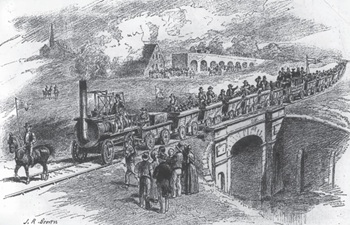
Heritage interests and operational requirements must be balanced.
Historic England publishes research into embodied carbon when retrofitting traditional buildings.
New Prime Minister delivers on ECA call for cut in electricity costs.

CIOB reacts to the announcement of Andy Burnham as Prime Minister.

Heritage and conservation science workforce survey - Have your say.

England's Suburbs 1820-2020. Book review.

New, more proportionate and targeted approach for higher-risk building assessments.
Government brings British Steel into public ownership.
UKCW Birmingham returns with bold new theme and focus.
New guidance published on competence requirements for self-certification schemes.
Construction Management, 8 July
NEETs crisis drives interest in trades, but apprenticeships barriers remain.
Passive fire protection webinar

MEP services penetration seals.